

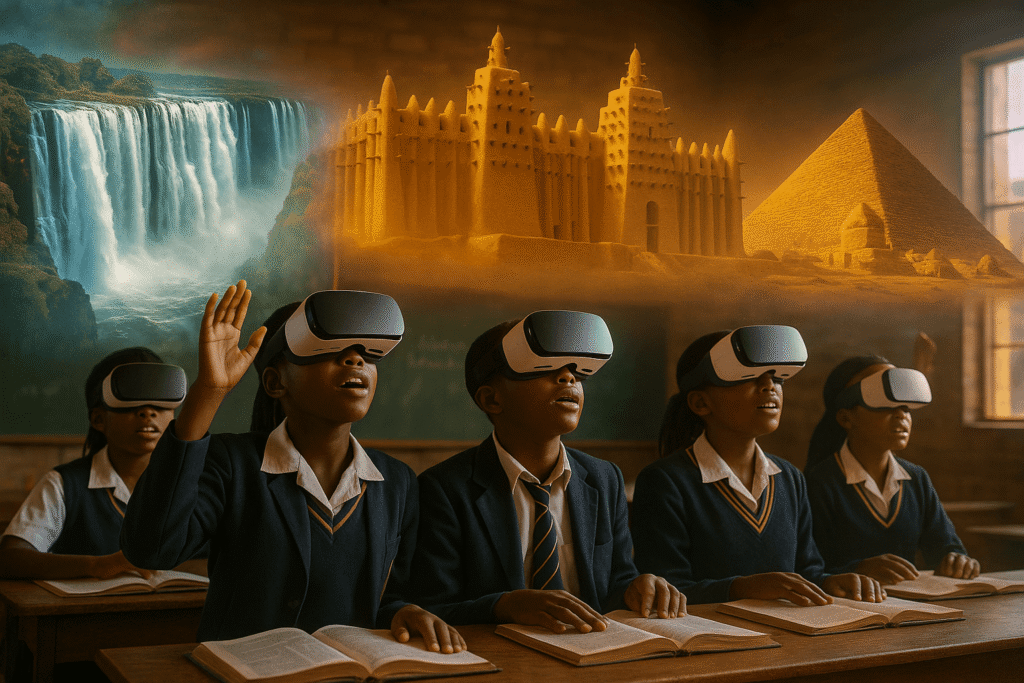
Introduction to Virtual Reality in Education
The integration of virtual reality (VR) in education represents a significant shift in how learners engage with content, particularly in the African context. With increasing interest in immersive learning experiences, VR is emerging as a compelling alternative to traditional educational methods. It provides the opportunity for students to explore environments and scenarios that would otherwise be inaccessible due to geographical, financial, or resource constraints. This innovative approach not only enhances engagement but also fosters a deeper understanding of complex concepts by allowing students to experience lessons in a captivating and interactive manner.
In many parts of Africa, the limitations of conventional teaching methods are evident. Classrooms often lack the necessary resources, such as textbooks, laboratory equipment, and even qualified educators, which hampers the learning experience. Additionally, the traditional lecture format may fail to adequately capture the attention of students, leading to disengagement and lower academic achievement. VR offers a solution to these challenges by transforming the educational landscape. By simulating real-world scenarios, students can participate in virtual field trips that illustrate scientific principles, historical events, or cultural experiences without leaving their classrooms.
Furthermore, the use of virtual reality can significantly improve accessibility in education across diverse regions. In remote areas where physical schools may be limited or nonexistent, VR can bring quality learning experiences directly to the students. This technology enables educators to create tailored educational content that resonates with local contexts and cultures, empowering students and fostering a sense of ownership over their learning journey. As such, virtual reality stands to revolutionize the educational framework in Africa by providing innovative solutions that bridge existing educational gaps and promote an inclusive learning environment.
Exploring Innovative Teaching Methods through VR
The integration of Virtual Reality (VR) in education has emerged as a groundbreaking approach, particularly in African schools where traditional teaching methods often fall short of engaging students. VR technology introduces innovative teaching methods that transform conventional learning by providing immersive experiences that captivate students’ attention and facilitate deeper understanding. Through VR, students can embark on virtual field trips that allow them to explore cultural heritage sites, scientific environments, and historical landmarks without leaving the classroom.
One notable application of VR in education is cultural heritage exploration. Students can delve into the rich history of diverse cultures across the African continent by virtually visiting museums, historical sites, and villages. This interactive experience not only enhances their knowledge of their own heritage but also promotes cultural appreciation and empathy towards others. Such explorations significantly enrich students’ learning experiences, enabling them to engage actively with the content and fostering curiosity beyond the confines of textbooks.
Similarly, scientific fieldwork through VR provides students with the opportunity to conduct experiments and observe phenomena in an immersive setting. For instance, students can virtually explore ecosystems, dissect organisms, or witness geological events. This hands-on approach enhances their comprehension of complex scientific concepts, encourages critical thinking, and promotes collaboration among peers as they navigate these virtual scenarios together. Additionally, VR enables access to resources and environments that may be difficult to reach due to geographic, financial, or logistical constraints.
In essence, the application of VR technology in teaching methods represents a significant shift in the educational landscape of Africa. By incorporating virtual field trips into the curriculum, educators can cultivate more meaningful interactions and foster a deeper understanding of various subjects. This innovative approach not only engages students but also equips them with the skills necessary to thrive in an increasingly digital world.
The Benefits and Challenges of VR in African Education
Virtual reality (VR) has emerged as a transformative educational tool, particularly in the context of African education, where traditional teaching methods may not fully engage students. One of the primary benefits of incorporating VR into the classroom is increased student engagement. By immersing learners in interactive, lifelike environments, VR can enhance motivation and active participation. Students can explore historical sites, dive into oceanic depths, or walk on Mars, all from their classrooms, hence expanding their horizons and fostering a greater enthusiasm for learning.
Another significant advantage of VR in education is personalized learning experiences. Each student has unique learning needs, and VR can be tailored to address varied educational styles. For example, visual learners can benefit from enriched graphical content, while kinesthetic learners can interact with three-dimensional models. This adaptability within the VR environment supports differentiated instruction, allowing educators to provide more customized educational paths that align with their students’ requirements.
Moreover, VR offers students exposure to global perspectives, a crucial aspect in an increasingly interconnected world. It helps bridge cultural gaps and encourages empathy by allowing learners to experience different lifestyles and environments far beyond their local context. This exposure is particularly beneficial in Africa, where educational resources may be limited. However, the integration of VR into African schools is not without its challenges.
Infrastructure issues such as inadequate electricity supply and internet connectivity can hinder the adoption of VR technology. Access to devices remains a critical barrier, as many schools may lack the financial resources to invest in necessary hardware. Furthermore, the success of VR implementation relies heavily on trained educators who understand how to effectively integrate technology into their teaching strategies. Overcoming these challenges requires concerted efforts from stakeholders, including governments, educational institutions, and technology partners, to invest in the necessary infrastructure and training for educators.
Envisioning the Future of Education in Africa with VR
The potential of virtual reality (VR) to revolutionize education in Africa has garnered increasing attention, especially as technological advancements continue to unfold. As educators and policymakers look towards the future, it is essential to consider how VR can be integrated into traditional learning environments, creating immersive and engaging experiences that cater to diverse learning styles. This transformation could bridge educational gaps, especially in under-resourced areas, offering students access to experiences that were previously unimaginable.
The implications for the education system are significant. As VR technology becomes more accessible, it holds the promise of becoming a standard teaching tool across the continent. Students will be able to embark on virtual field trips, exploring historical sites, participating in scientific experiments, or experiencing global cultures firsthand—all from their classrooms. This immersive approach can foster a deeper understanding of complex subjects, enhancing critical thinking skills and stimulating curiosity.
To realize this vision, collaboration among educators, policymakers, and technology companies is crucial. Educational institutions should embrace partnerships with tech companies to develop tailored VR content that aligns with local curricula and addresses the unique educational challenges faced across Africa. Furthermore, policymakers must invest in the necessary infrastructure to ensure that schools are equipped with the technology needed to implement these innovative solutions effectively.
Educators themselves play a pivotal role in this transition. They must be equipped with the training and resources to incorporate VR into their teaching methodologies successfully. Attendance at workshops and professional development initiatives focusing on VR in education can facilitate this shift. Additionally, local communities should rally around VR initiatives, advocating for the integration of technology in their schools and supporting programs that aim to enhance educational outcomes. This collective effort will pave the way for a more technologically enriched educational landscape in Africa.
As we envision the future of education in Africa, embracing virtual reality is vital to ensuring that our students are prepared for a rapidly evolving world. Engaging with VR initiatives now could shape the trajectory of education and create lasting change across the continent.